
Signs of Adulterated Ghee: Empirical Indicators of Hydrogenated Fats & Synthetic Additives
In commercial markets, traditional dairy butterfat is frequently adulterated with inexpensive hydrogenated vegetable shortenings, refined seed oils, and synthetic flavoring agents. Beyond compromising the authentic culinary profile of pure Syrian baladi ghee, industrial trans fats present documented dietary concerns, unlike the wholesome wellness properties of authentic ghee. This advisory details five critical empirical markers to detect adulterated ghee.
1. Waxy Palate Residue & Absence of Natural Melt
Pure milk fat features a melting threshold of 32°C to 36°C, liquefying seamlessly upon contact with body heat in the oral cavity. Conversely, hydrogenated vegetable fats and tallow possess rigid molecular structures requiring temperatures exceeding 42°C to melt.
The “Waxy Coating” Palate Marker
Definitive Indicator: If a persistent, tacky waxy film coats your palate that resists natural saliva dissolution, the product is heavily diluted with high-melting-point hydrogenated industrial fats.
2. Synthetic Diacetyl Aroma vs Natural Dairy Bouquet
Traditional Syrian ghee pastured in Deir ez-Zor, Hama, or the Syrian Badia carries a gentle, nuanced pasture bouquet that blooms progressively under heat.
Adulterated batches frequently utilize concentrated chemical butter flavorings (synthetic diacetyl) that assault the senses immediately upon jar opening. Under frying temperatures, this artificial fragrance rapidly vanishes or degrades into a burnt oil odor, exposing the underlying deodorized vegetable base.
3. Artificial Dyes & Unnatural Yellow Pigmentation
Authentic cow ghee displays a natural golden amber hue derived from beta-carotene, while Awassi sheep ghee is naturally ivory-white. Neon, ultra-bright yellow tones signify synthetic food dyes added to mask bleached white palm or seed oils.
Daylight Color Dispersion Check
Definitive Indicator: Artificial chemical colorants frequently settle irregularly, displaying greenish-yellow halos or sediment rings absent in organic butterfat.
4. Thermal Instability, Spattering & Acrid Smoke
Thorough artisanal clarification eliminates virtually 100% of moisture and protein solids, endowing pure ghee with an ultra-high smoke point exceeding 250°C (482°F), ensuring exceptional stability for culinary roasting and pastry making.
Direct Skillet Heating Behavior
Adulteration Markers: Violent popping and spattering from residual water moisture, dense frothing foam, premature smoking below 180°C, and charred black debris at the base of the pan.
5. Layer Separation & Uneven Crystallization
Under refrigeration (4°C for 4 hours), pure dairy fat solidifies into a single homogeneous mass with uniform density and color throughout.
Observation of a liquid oil layer hovering over a dense solid mass, or disjointed white fat islands suspended in yellow oil, demonstrates multi-source fat blending with divergent melting curves.
6. Comprehensive Matrix: Pure vs Adulterated Ghee
| Quality Metric | 100% Authentic Syrian Ghee | Adulterated & Industrial Fats |
|---|---|---|
| Palate Dissolution | Melts cleanly at body temperature (32–36°C) | Leaves a persistent waxy coating requiring hot tea |
| Aromatic Bouquet | Warm, nuanced herbal and rustic pasture notes | Harsh synthetic butter odor that vanishes upon heating |
| Color Appearance | Natural ivory (sheep) or soft golden amber (cow) | Artificially fluorescent neon-yellow dyed tones |
| Heat Stability | High smoke point (>250°C) with crystal clarity | Violent spattering, dense foam, and black dregs |
| Cold Crystallization | Single uniform block of fine crystalline texture | Separates into distinct liquid oil and hard fat layers |
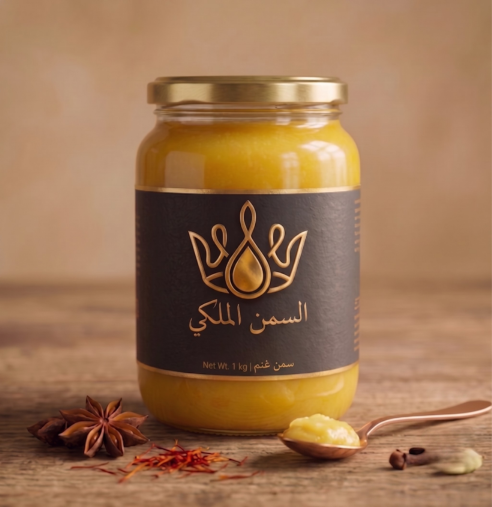
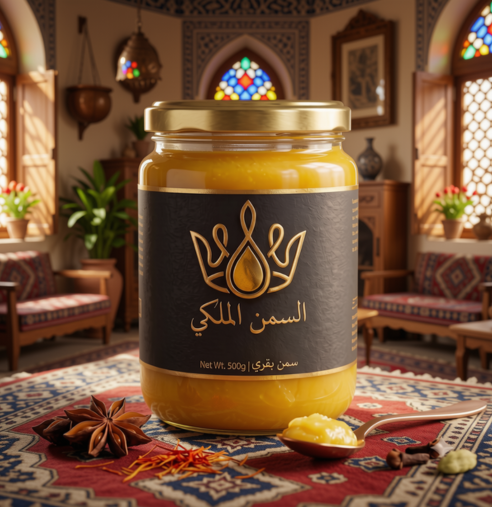
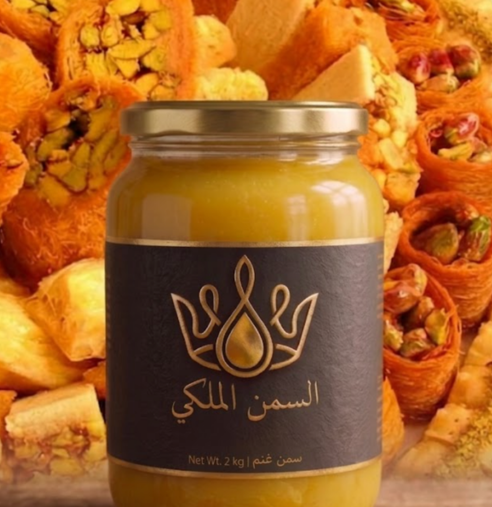
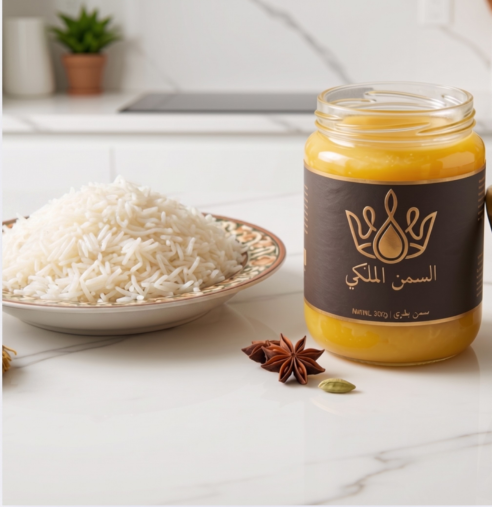
Certified 100% Pure Syrian Ghee Selections
Artisanal batches crafted and tested to rigorous dairy standards
8. Frequently Asked Adulteration Questions
What are the primary health risks of adulterated ghee?
Adulterated products often contain industrially hydrogenated vegetable oils loaded with trans fats that contribute to elevated LDL cholesterol and arterial inflammation, lacking the fat-soluble vitamins (A, D, E, K2) intrinsic to grass-fed pasture butterfat.
Does an intense aroma guarantee product authenticity?
No. Unusually strong initial aroma typically signals artificial diacetyl flavor compounds added to deodorized seed oils. Genuine ghee offers a subtle, pleasant aroma that unfolds harmoniously upon gentle heating.
How does Al Samn Al Malaki ensure 100% purity?
Every single batch undergoes comprehensive laboratory assays including fatty acid profile verification, moisture percentage evaluation, and peroxide indexing, ensuring absolute purity and zero vegetable fat contamination.