
How to Tell If Ghee Has Gone Bad: Sensory Signs of Rancidity, Oxidation, Moisture Spoilage & Safety Guidelines
Recognizing the unmistakable signs ghee has gone bad is vital for protecting digestive wellness and culinary standards. While authentic Syrian clarified butterfat possesses extraordinary natural shelf stability exceeding two years as documented in our ghee shelf life guide and our proper storage protocols, improper handling and moisture contamination can trigger lipid peroxidation and rancidity. This empirical guide provides sensory benchmarks to identify degraded butterfat.
1. The Three Definitive Sensory Markers of Ghee Rancidity
Degraded milkfat releases unambiguous sensory warnings:
- Pungent Varnish or Wet Cardboard Odor: Loss of rich, nutty butter aroma replaced by sharp aldehyde odors caused by free radical lipid breakdown.
- Harsh Bitter Bite & Lingering Sting: Acrid bitterness on the lateral borders of the tongue and back of the throat indicating elevated peroxide values and free fatty acid accumulation.
- Chalky Surface Discoloration & Dark Rings: Faded chalky white surface layers or dark oxidized margins caused by direct ultraviolet photo-oxidation as detailed in our authentic ghee color analysis.
The 3-Step Rapid Sensory Triage Protocol
2. Genuine Spoilage vs. Normal Thermal Texture Shifts
Consumers frequently mistake harmless physical state changes for spoilage:
- Summer Liquefaction & Granule Settling: Transitioning into clear liquid oil with granular crystals resting at the base is a completely normal physical response to warm ambient temperatures (>26°C) and does not indicate spoilage.
- True Chemical Rancidity: Involves chemical molecular breakdown accompanied by permanent off-odors and bitter taste, regardless of whether the fat is solid or liquid.
3. Mold Formation Risks: Water Ingress & Mycotoxins
Pure milkfat cannot support mold growth on its own, but external moisture changes everything:
Inserting damp spoons or introducing steam creates localized water micro-environments where fungal spores germinate into green, grey, or black mold colonies. These molds release mycotoxins that penetrate the lipid matrix, requiring full container disposal.
4. Distinguishing Rancid Ghee from Counterfeit Hydrogenated Fats
It is essential to distinguish between two completely different product defects:
- Adulterated / Counterfeit Ghee: Commercial fraud where hydrogenated vegetable oils or industrial waxes are added; fat clings to the roof of the mouth and lacks authentic aroma as explored in our adulterated ghee investigation.
- Spoiled Authentic Ghee: Genuine artisan dairy butterfat that has suffered natural oxidative or hydrolytic degradation from light, heat, or moisture exposure.
5. Suspected Spoilage Protocol: Is Scraping the Top Layer Safe?
Follow strict food safety recommendations:
- Visible Mold Colonies: Never scrape the surface; microscopic fungal roots extend throughout the fat substrate. Discard the entire jar.
- Mild Photo-Oxidation (Surface Only): If a clear jar sat in sunlight and only the topmost millimeters smell oxidized while the deeper core remains fragrant and sweet, carefully scoop away the top layer and use the remaining fat promptly for high-heat cooking.
6. Comparison Matrix: Fresh Ghee vs. Melted Fat vs. Spoiled Fat
| Sensory Attribute | Fresh Authentic Ghee | Heat-Softened Ghee (Normal) | Rancid / Spoiled Ghee (Defective) |
|---|---|---|---|
| Aroma | Rich, nutty, floral dairy fragrance | Enhanced fragrant aroma due to warmth | Harsh metallic, paint-like, sour odor |
| Flavor | Smooth, velvety dairy richness | Pure butterfat taste without sharpness | Acrid bitterness, throat burn, sour sting |
| Visual Texture | Danedar granular or smooth ivory/gold | Clear golden liquid with grain sediment | Mold specks, chalky white crust, dark rims |
| Safety Status | 100% safe for culinary excellence | 100% safe; re-solidifies in cool pantry | Unsafe; discard immediately |
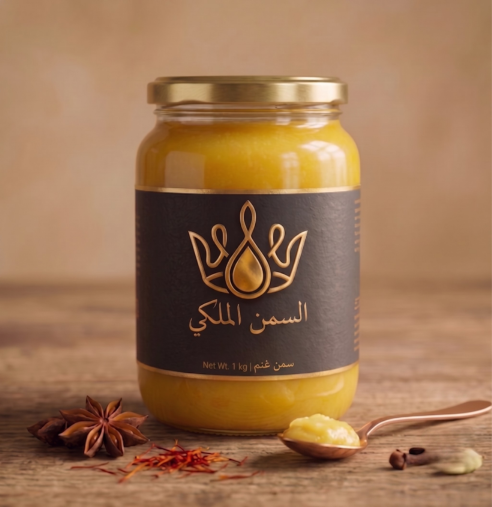
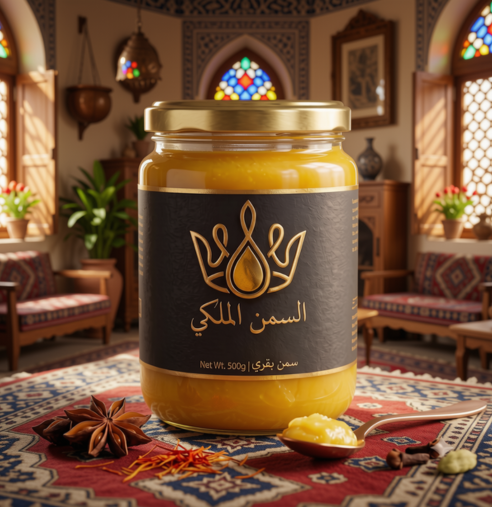
Certified Artisan Heritage Ghee Selection
100% pure Syrian clarified butterfat laboratory-tested for absolute purity and zero oxidative degradation
9. Frequently Asked Spoilage & Rancidity Questions
Does cooking with rancid ghee cause severe food poisoning?
Rancid ghee rarely causes acute bacterial poisoning, but oxidized fats contain harmful free radicals and ruin the entire flavor of your recipe with unpleasant bitterness.
What does a white surface layer mean? Is it mold?
If the white layer melts upon gentle warming into clear oil, it is normal fat crystallization. If it is fuzzy, powdery, or smells musty, it is fungal mold caused by water contamination.
How does Al Samn Al Malaki prevent spoilage during transport?
All batches are packaged in airtight, food-grade lined tins sealed in oxygen-depleted conditions to ensure fresh delivery even across long transit routes.