
How to Store Arabic Ghee Properly After Opening: Shelf Life, Texture Preservation, and Rancidity Prevention Standards
Authentic artisan Arabic ghee possesses an extraordinary natural ability to maintain peak culinary freshness, rich floral aromas, and delicate granular crystallization for over two years without artificial preservatives. This longevity depends entirely on strict physical isolation from three primary oxidation vectors: ambient moisture, direct ultraviolet light, and excessive heat as documented in our pure ghee identification guide and our adulterated ghee investigation. This empirical guide outlines the scientific protocols for post-opening preservation.
1. Lipid Physics: Why Clarified Ghee Lasts Years Without Spoiling
The remarkable stability of artisan Syrian ghee stems from the traditional clarification process, which isolates milkfat to 99.8% purity by eliminating water moisture, milk sugars (lactose), and milk proteins (casein). Because microbial bacteria and molds require aqueous moisture and protein substrates to survive, pure clarified ghee is inherently inhospitable to microbial growth.
The Chief Enemy of Clarified Fat: Water Ingress
2. Pantry vs. Refrigerator Storage: Expert Comparative Analysis
Choosing the ideal storage location after unsealing:
- Dark Pantry / Kitchen Cabinet (18°C – 24°C): The recommended standard for daily culinary use. Maintains ideal granular spoonability and lets delicate volatile aromas release freely.
- Refrigerator (4°C): Advised only in intensely hot climates (>32°C) or when storing bulk containers exceeding 6 months of use; ghee solidifies into a firm block and temporarily loses its grain until brought back to room temperature.
3. Four Golden Handling Protocols for Opened Containers
To preserve royal aroma from the first to the final spoonful:
- Always Use a Bone-Dry, Dedicated Spoon: Never insert damp spoons or utensils coated with food residues, spices, or sauces.
- Reseal Immediately: Tightly fasten the container lid immediately after scooping to prevent atmospheric oxygen exchange.
- Isolate from Heat Sources: Store away from stove burners, ovens, dishwashers, and sunlit windows.
- Decant Bulk Volumes: If purchasing large tins (2kg+), decant a smaller working portion into a clean dark glass jar for everyday use, keeping the mother tin sealed in a cool pantry.
The luxurious grain of artisan ghee forms when melted triglycerides crystallize slowly at moderate ambient temperatures. Rapid freezing in deep freezers disrupts crystal formation, yielding a flat, waxy solid rather than velvety granules.
4. Container Standards: Food-Grade Tin & Dark Glass vs. Plastic
Packaging material plays a decisive role in preventing lipid oxidation:
- Food-Grade Lined Tin Canisters: The heritage gold standard; provides 100% light opacity and airtight hermetic sealing.
- Amber / Dark Glass Jars: Chemically inert, non-reactive, and impervious to aroma leaching.
- Porous Plastics: Discouraged for extended storage due to micro-oxygen permeation and potential flavor absorption.
5. Sensory Indicators of Lipid Peroxidation & Rancidity
Evaluate stored ghee using direct sensory indicators as outlined in our authentic ghee color analysis:
- Sour or Pungent Odor: Conversion of rich floral dairy aromas into an acrid, varnish-like or paint-like smell.
- Acrid Metallic Bite: Sharp bitterness or burning sting on the lateral edges of the tongue indicating elevated peroxide values.
- Chalky Discoloration: Whitish dry crusting or dark oxidized rings on the surface layer.
6. Storage Conditions & Expected Shelf Life Matrix
| Storage Environment | Optimal Temperature | Opened Shelf Life | Physical State & Texture |
|---|---|---|---|
| Dark Kitchen Pantry (Dry & Sealed) | 18°C – 22°C | 12 to 18 Months | Velvety, granular, and effortlessly scoopable |
| Refrigerator (Middle Shelf) | 4°C – 6°C | 24+ Months | Firm solid block; softens within minutes at room temp |
| Stovetop / Direct Sunlight (Unfavorable) | > 30°C with light | Under 3 Months | Completely liquefied with accelerated photo-oxidation |
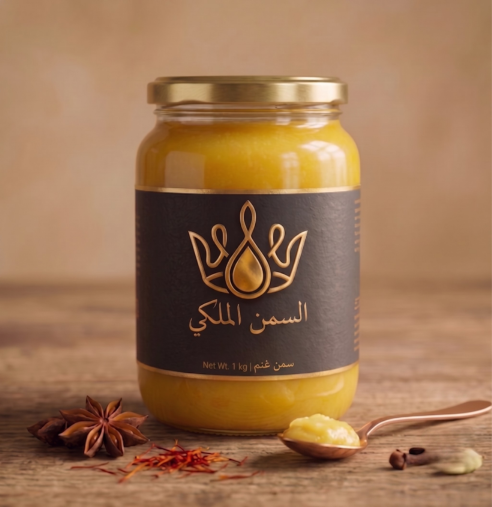
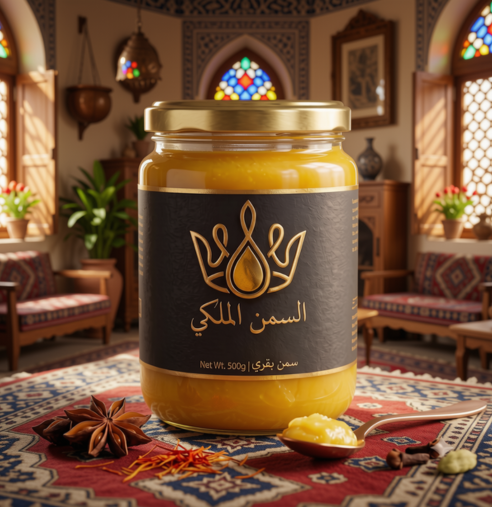
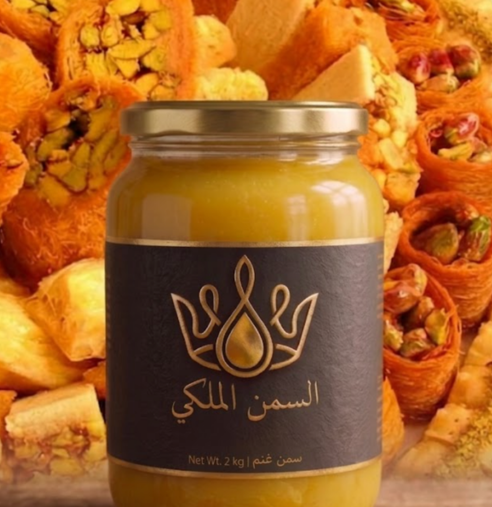
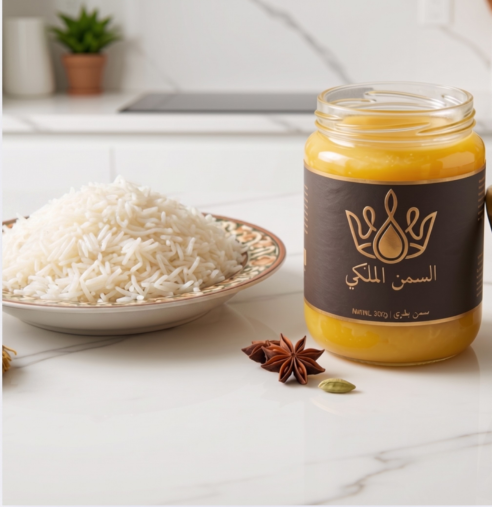
Certified Artisan Ghee in Protective Packaging
Hermetically sealed food-grade tins engineered to protect delicate milkfat from light and oxidation
8. Frequently Asked Storage & Freshness Questions
Must opened Arabic ghee be refrigerated immediately?
No. Clarified butterfat contains virtually zero moisture or perishable proteins, allowing it to stay fresh at room temperature (<24°C) for over a year when kept sealed with dry utensils.
What should I do if ghee liquefies during summer heatwaves?
Liquefaction at warm temperatures is a natural physical change that does not indicate spoilage. Simply place the tin in a cool pantry or refrigerator to re-solidify without any compromise to flavor.
Can artisan ghee be safely frozen?
Yes, ghee freezes safely for multi-year storage, though it is rarely necessary due to its outstanding ambient shelf life.