
Types of Arabic Ghee in Syria: A Regional Quality Classification of Artisanal Butterfat
Syria possesses an exceptional ecological tapestry that has established it as the historic cradle of world-renowned clarified butterfat. Distinctions among Syrian ghee varieties extend beyond milk species (sheep vs cow) into micro-climatic pasturage, wild forage botany, and ancestral clarifying traditions documented in our wellness analysis. This monograph presents the complete regional taxonomy of Syrian baladi ghee.
1. Deir ez-Zor & Eastern Region (Euphrates Awassi Sheep Ghee)
Authentic Deir ez-Zor ghee and products from the Eastern Region (Al-Hasakah, Raqqa, and the Euphrates basin) occupy the pinnacle of Syrian dairy heritage. Extracted from Awassi sheep grazing on wild artemisia (Shih) and steppe herbs along the river valley.
Awassi Euphrates Sheep Ghee
Appearance & Texture: Pure ivory crystallization with distinct coarse granular pearls.
Aromatic Profile: Robust, warm rustic bouquet enriched with wild steppe herb notes.
Best Applications: Festive Mansaf banquets, spiced roasted meats, and elite Damascene Baklava.
2. Hama & Ghab Valley (Golden Pasture Cow Ghee)
Hama governorate is celebrated for the fertile Ghab plains irrigated by the Orontes River. Cattle grazing on lush clover and fresh green forages yield golden cow ghee of celebrated purity.
Traditional Hama Pasture Cow Ghee
Appearance & Texture: Brilliant golden amber hue with a velvety micro-fine crystalline melt.
Aromatic Profile: Mild, soothing buttery sweetness suitable for all palates.
Best Applications: Everyday family dining, braised vegetables, delicate sauces, and soups.
3. Syrian Badia Steppe Ghee (Aromatic Wild Flora)
Syrian Badia ghee is crafted by nomadic pastoralists in the desert steppes around Palmyra. Feeding on potent desert forages produces dense butterfat with an extraordinary aromatic depth and minimal free fatty acid levels.
4. Homs Countryside Ghee (Balanced Valley Pastures)
Homs countryside ghee unites the western meadows of Talkalakh and Qusayr with the eastern steppes, producing balanced sheep and cow butterfat favored for traditional confectionery and festive rice dishes.
5. Specialized Clarifications: Pastry & Banquet Ghee
Royal Pastry Ghee: Clarified at ultra-low temperatures with extended settling to eliminate every milk solid particle, providing Baklava and Maamoul with a long-lasting golden crispness as detailed in our culinary guide.
Deiri Banquet Ghee: A full-bodied, high-fat blend engineered to withstand high-heat braising while giving Mansaf rice platters an authoritative sheen and aroma.
6. Regional & Functional Comparative Matrix
| Regional Variety | Milk Source | Color & Texture | Recommended Gastronomic Role |
|---|---|---|---|
| Deir ez-Zor & Eastern | 100% Awassi Sheep Milk | Ivory crystalline coarse granules | Mansaf banquets, festive lamb, Baklava |
| Hama & Ghab Plains | 100% Meadow Cow Milk | Golden amber with velvety melt | Daily cooking, braising, sauces, eggs |
| Syrian Badia Steppe | Nomadic Awassi Sheep | Dense ivory with steppe herb bouquet | Heritage confections and festive roasting |
| Homs Countryside | Pasture Sheep & Cow | Warm ivory-gold balanced texture | Homs Halawa, Maamoul, and rice pilafs |
| Royal Pastry Ghee | Ultra-Clarified Butterfat | Crystal-clear moisture-free sheen | Baklava, Kunafa, Maamoul, and Barazek |
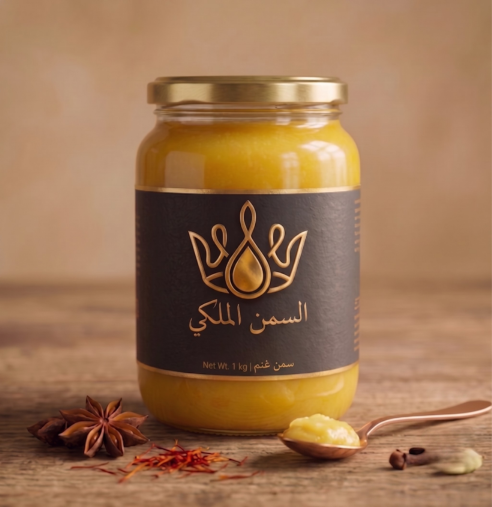
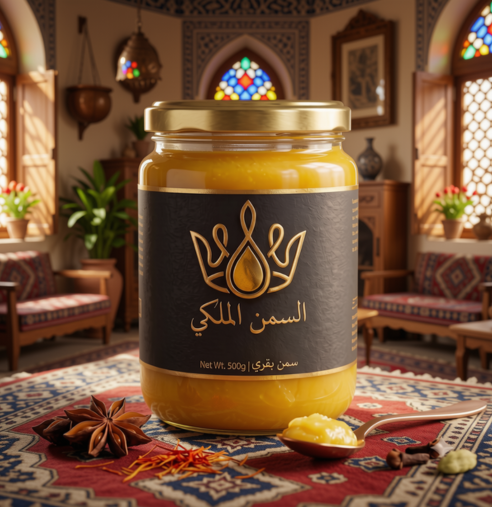
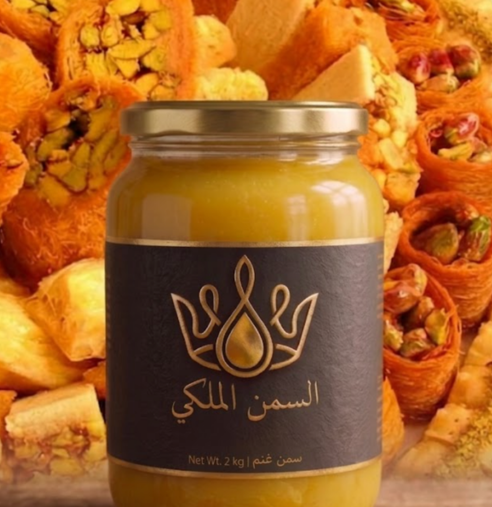
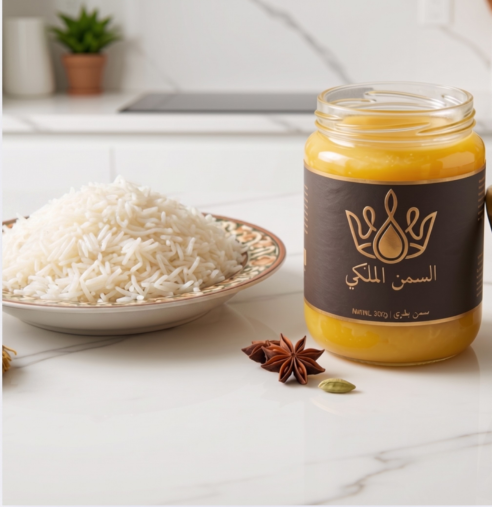
Certified Pure Syrian Ghee Selections
Artisanal batches crafted and tested to rigorous dairy standards
8. Frequently Asked Provenance Questions
Does nutritional value vary between regional varieties?
All authentic varieties offer high nutritional bio-availability; Eastern sheep ghee excels in short-chain fatty acids for immediate cellular energy, while Hama cow ghee provides elevated natural carotenoids and Vitamin A.
What is the ideal season to purchase Syrian ghee for pantry storage?
Spring harvest batches (April and May) represent the prime season for long-term provisioning (Mouneh), when seasonal pastures bloom fully and milk fat concentrations reach peak purity.
How does Al Samn Al Malaki preserve regional authenticity?
Through direct partnerships with artisan dairy shepherds across Deir ez-Zor, Hama, and Badia steppes, subjecting every production batch to rigorous laboratory certification before packaging.