
Why Arabic Ghee Prices Vary in Syria: An Economic Analysis of Production Costs & Quality Drivers
Consumers frequently observe significant price variations across Syrian baladi ghee in international markets. These discrepancies do not reflect arbitrary commercial markups; rather, they are rooted in strict biological, agricultural, and artisanal realities governing raw milk yield, seasonal steppe pasturage, and traditional clarification losses documented in our wellness analysis. This report examines the economic foundations of Syrian ghee pricing.
1. Raw Milk Conversion Rates: Awassi Sheep vs Dairy Cattle
Physical conversion yield is the foremost determinant of butterfat cost. Producing a single kilogram of pure Awassi sheep ghee requires between 15 and 20 liters of fresh whole sheep milk. Indigenous Awassi ewes produce modest daily milk volumes (<1 liter daily) while roaming wild steppes in Deir ez-Zor and the Syrian Badia.
Conversely, one kilogram of pasture cow ghee requires 22 to 25 liters of bovine milk. However, the abundant daily yield of dairy cows (15–25 liters daily) and their continuous lactation cycle significantly reduce the baseline cost per liter of milk, translating to more accessible cow ghee pricing.
2. Seasonal Grazing Windows: Spring Harvest vs Year-Round Dairy
Awassi sheep butterfat harvesting is confined to a fleeting 60- to 75-day spring window (April and May) when desert flora blooms fully. Elevated seasonal demand for household winter provisioning (Mouneh) and upscale confectionery elevates spring harvest market valuations relative to late-season batches.
3. 100% Butterfat Purity vs Inexpensive Vegetable Shortening Blends
Low-cost commercial products often rely on hydrogenated palm shortenings and synthetic flavoring agents costing a small fraction of raw milk fat. Authentic baladi ghee is 100% pure milk fat subjected to stringent laboratory assays to verify zero vegetable fat blending, as outlined in our adulteration detection guide.
4. Traditional Slow Clarification & Moisture Evaporation Loss
Authentic Levantine clarification involves gentle simmering of raw cultured butter to completely evaporate residual water (16–18% of butter weight) and precipitate milk solids. This indispensable volume reduction to reach 99.8% pure butterfat elevates the final price per kilogram relative to raw unclarified butter.
5. Steppe Logistics, Laboratory Certification & Barrier Packaging
Preserving artisanal integrity entails specialized milk aggregation from pastoral nomads, refrigerated transit, laboratory assays (iodine and saponification indices), and hermetic barrier packaging protecting butterfat against light and oxidation as detailed in our culinary guide.
6. Economic Cost Breakdown & Comparative Pricing Matrix
| Cost Driver | 100% Pure Awassi Sheep Ghee | 100% Pure Pasture Cow Ghee | Industrial Fat Blends |
|---|---|---|---|
| Raw Milk Required | 15–20 Liters of Awassi Milk | 22–25 Liters of Bovine Milk | Refined Palm / Seed Oils |
| Production Window | Strict 2-Month Spring Harvest | Continuous Year-Round Supply | Unlimited Industrial Output |
| Clarification Loss | 16–20% Moisture/Solid Evaporation | 16–18% Moisture/Solid Evaporation | Zero Artisanal Evaporative Loss |
| Butterfat Purity | 100% Pure Natural Milk Fat | 100% Pure Natural Milk Fat | <20% Fat or Synthetic Diacetyl |
| Market Valuation | Premium Heritage Pricing | Accessible Everyday Quality | Low-Cost Chemical Products |
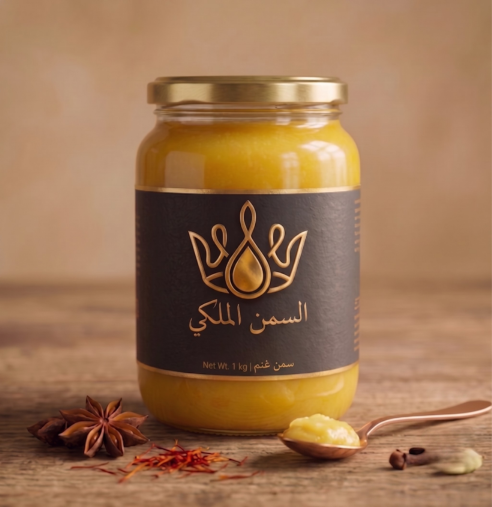
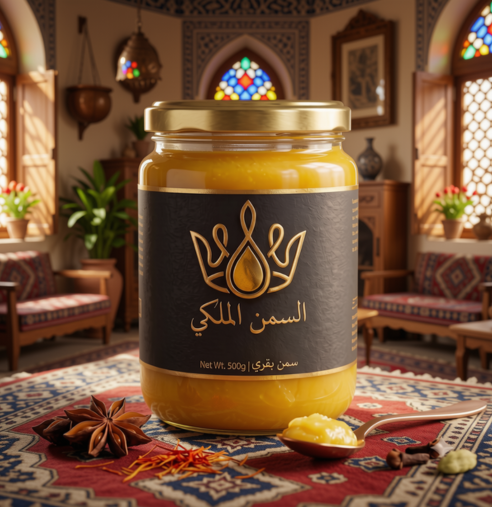
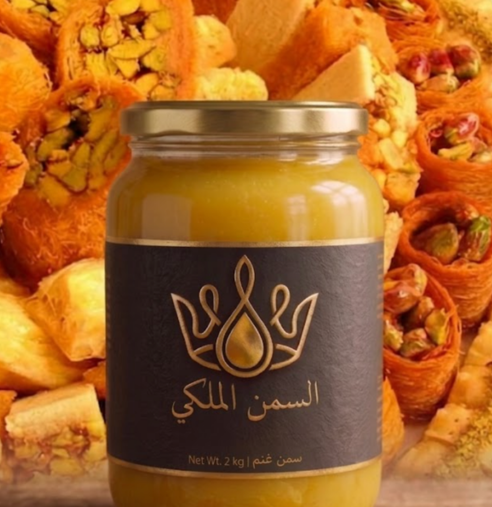
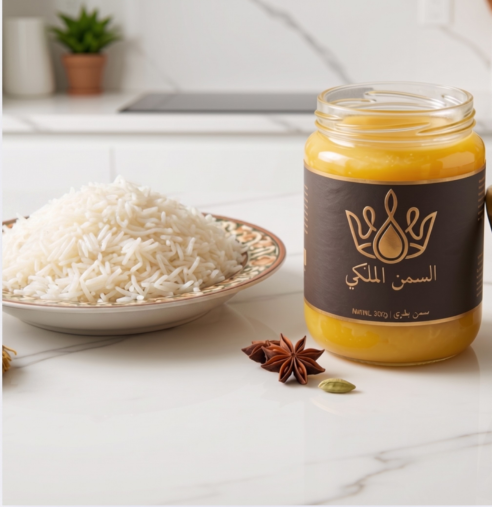
Certified 100% Pure Syrian Ghee Selections
Artisanal batches crafted and tested to rigorous dairy standards
8. Frequently Asked Pricing Questions
Does a significantly discounted price indicate adulteration?
If the retail price of a ghee jar is less than the market cost of 15 liters of fresh raw milk, the product almost certainly contains hydrogenated vegetable oils or tallow substitutes, as genuine butterfat cannot be produced below raw dairy material costs.
Do bulk container sizes offer better economic value?
Yes. Larger culinary tins (such as 2 kg, 4 kg, and 10 kg formats) offer substantial cost efficiency per kilogram by reducing proportional packaging and freight expenses relative to small retail jars.
How does Al Samn Al Malaki ensure fair and transparent pricing?
By partnering directly with pastoral shepherds across Syrian dairy regions without intermediaries, optimizing clarification efficiency, and delivering laboratory-certified 100% pure butterfat at competitive global rates.