
Does Ghee Change After Melting and Re-solidifying? The Science of Phase Transitions, Flavor Stability & Texture Reset
The question does ghee change after melting and re-solidifying is one of the most common inquiries among e-commerce customers receiving ghee deliveries during warm summer months. The definitive scientific conclusion is: No, authentic clarified Arabic ghee does not undergo any chemical or nutritional degradation after melting and re-solidifying. It retains 100% of its fatty acid purity, signature pasture aroma, and rich nutrient density across repeated melting cycles, as documented in our ghee texture guide and our summer storage protocols. This empirical report explores phase transition thermodynamics and the simple protocol to restore granular perfection.
1. Definitive Scientific Truth: Do Melting Cycles Alter Ghee Chemistry?
Melting and re-solidifying are completely reversible physical phase changes:
- Ester Bond Integrity: Thermal liquefaction does not break triglyceride ester bonds or generate free radicals, preserving baseline peroxide values provided the container is sealed.
- Vitamin Stability (A, D, E, K): Fat-soluble vitamins endure temperatures exceeding 180°C without denaturing; transit temperatures (35°C–40°C) leave nutritional density completely intact.
The Thermal Cycling Assay
2. Pure Anhydrous Ghee vs. Dairy Butter Emulsions
Understanding the fundamental distinction between butter and clarified ghee:
- Dairy Butter: A water-in-oil emulsion containing 16% to 18% water and milk solids. Melting breaks the emulsion permanently, separating watery whey from fat.
- Pure Clarified Ghee: 99.8%+ anhydrous milkfat. Lacking water, it re-crystallizes into a homogenous lipid matrix automatically upon cooling.
3. E-Commerce & Shipping Guide: What to Do If Ghee Arrives Liquid
If your package arrives with liquid ghee during summer transit:
Liquid arrival is direct physical proof of pure, unadulterated butterfat free from artificial hydrogenated waxes engineered to resist natural melting. Simply place the unopened tin in an air-conditioned room (22°C) to allow natural crystalline reconstruction.
4. Cooling Kinetics: Rapid Chilling vs. Slow Ambient Grain Formation
The cooling rate directly dictates the physical mouthfeel of re-solidified ghee as detailed in our refrigeration guide:
- Rapid Refrigerator Chilling (4°C): Rapidly solidifies into uniform Alpha crystals, producing a smooth, firm, waxy block without granularity.
- Slow Ambient Cooling (20°C – 24°C): Promotes spherical Beta-prime crystal growth, restoring the prized, velvety Danedar grain.
5. The 3-Step Texture Reset Protocol to Restore Danedar Grain
To restore uniform, gourmet granular texture to melted or uneven ghee:
- Step 1 (Homogeneous Melt): Warm the container in a gentle warm water bath (45°C – 50°C) until completely melted and clear.
- Step 2 (Dry & Transfer): Dry the container exterior completely and place it in a cool, dark pantry (21°C–23°C).
- Step 3 (Undisturbed Setting): Allow it to rest undisturbed for 12 to 18 hours. The slow cooling reconstructs delicate crystalline micro-grains.
6. Comparative Phase Transition & Stability Matrix
| Physical State | Temperature Range | Visual Appearance | Aroma & Flavor | Quality & Purity Verdict |
|---|---|---|---|---|
| Fresh Untouched Ghee | 18°C – 24°C | Velvety, granular semi-solid | Rich, balanced pasture bouquet | Baseline artisanal standard (100%) |
| Liquid Melted (In Transit) | Above 32°C | Clear golden liquid oil | Enhanced fragrant volatility | 100% pure; zero nutritional loss |
| Re-solidified (Slow Ambient) | 20°C – 23°C | Homogenous Danedar granular grain | Complete aromatic stability | 100% restored to original perfection |
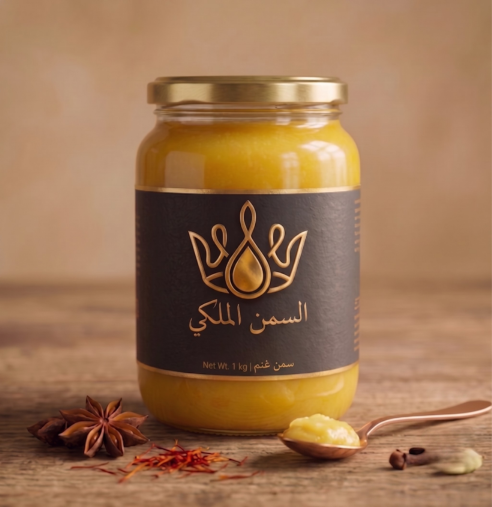
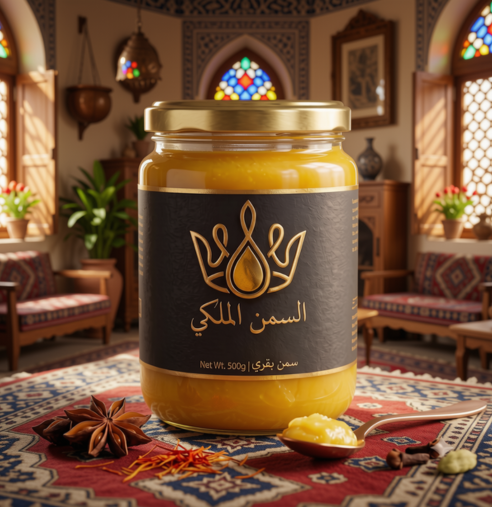
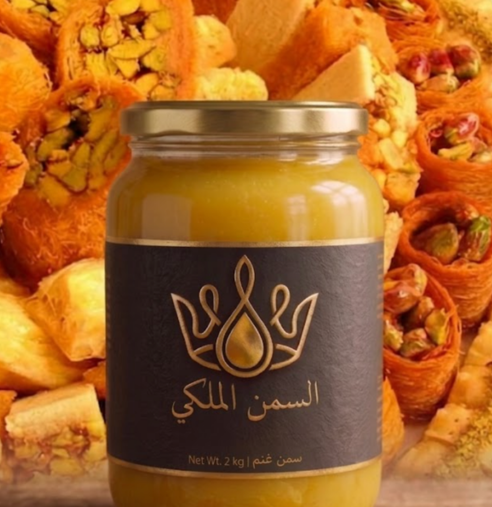
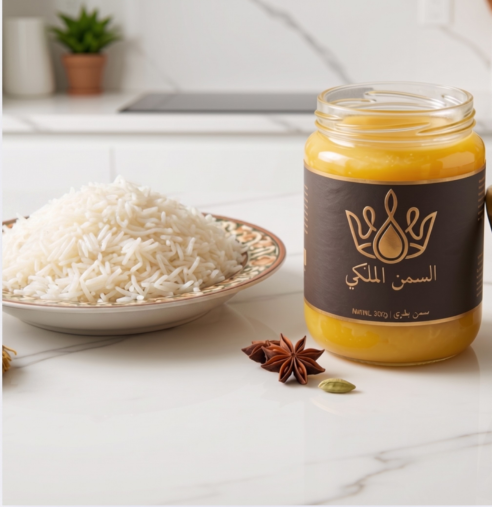
Certified Artisan Heritage Ghee Selection
Pure Syrian clarified butterfat packaged in hermetic tins engineered to withstand shipping transitions and restore full grain
8. Frequently Asked Melting & Re-solidification Questions
How many times can ghee melt and re-solidify without spoiling?
Ghee can undergo unlimited phase transition cycles without chemical harm, provided the container remains hermetically sealed against light and moisture.
Why does melted ghee form a liquid layer over bottom sediment?
Low-density liquid oleic fatty acids float naturally above denser saturated crystal spheres. Gentle stirring or slow ambient cooling restores full homogeneity.
Does melting alter the smoke point of ghee?
No. The high smoke point (250°C / 482°F) remains completely unchanged because pure milkfat lacks the water and milk proteins that cause burning.