
How to Use Arabic Ghee for Maamoul & Pastries: Semolina Rubbing Chemistry, Flaky Crust Secrets & Master Sweet Ratios
Understanding using ghee for maamoul and sweets is the defining mastery behind authentic Levantine confectionery, delivering the prized melt-in-mouth crumb and crisp, flaky lamination celebrated from Damascus to Aleppo. Clarified butterfat is far more than an aromatic enhancer as detailed in our sweets ghee selection guide; it serves as a critical biochemical shortening agent that inhibits gluten development, preventing dough from turning tough and bready. This empirical guide reveals exact pastry ratios, conditioning protocols, and temperature dynamics across classic Arabic desserts.
1. Fat Shortening Chemistry: How Ghee Delivers Melt-in-Mouth Texture
Artisanal Maamoul and Ghraybeh rely on precise gluten inhibition mechanics:
- Gliadin & Glutenin Barrier: When pure ghee coats semolina or flour granules prior to liquid hydration, lipid molecules form a hydrophobic envelope that blocks water binding, preventing tough elastic gluten strands from forming.
- Velvety Ghraybeh Aeration: Traditional Ghraybeh uses a golden 1:1:2 ratio (1 part cold solid ghee : 1 part powdered sugar : 2 parts flour). Whipping cold ghee creates a micro-aerated emulsion that dissolves instantly at oral body temperature (37°C).
The Semolina Conditioning Protocol (Baths)
2. The Semolina Rubbing Protocol: 24 to 48-Hour Lipid Absorption
The 48-hour conditioning rest separates master pastry artisans from casual bakers:
- Softening Semolina Husks: Slow fat absorption softens hard semolina endosperms naturally without requiring excessive milk or water that could blur ornate wooden mold impressions.
- Mold Relief Preservation: Suppressed gluten elasticity prevents dough expansion in a 220°C oven, ensuring sharp geometric crust definition.
3. The Three Physical States: Cold Firm, Granular & Hot Melted Wash
Each classic confectionery style demands a distinct physical phase as explored in our ghee texture science guide:
- Cold Solid Ghee (12°C – 15°C): Essential for whipping light, aerated Ghraybeh dough.
- Granular Semi-Solid (20°C – 23°C): Ideal for rubbing semolina Maamoul, Barazek, and Kleicha doughs.
- Piping Hot Melted Ghee (50°C – 60°C): Poured directly over stacked phyllo layers in Baklava, Warbat, and Kunafa.
4. The Baklava Ghee Wash: 20-Layer Lamination & Excess Draining Secrets
The secret behind authentic 20-layer crisp Baklava lamination:
Assembled raw phyllo pastries are completely submerged in generous amounts of hot clarified ghee before baking. In the oven, boiling fat separates delicate pastry sheets into gossamer crisp layers. Immediately upon leaving the oven, all excess unabsorbed ghee is decanted completely before ladling hot aromatic sugar syrup.
5. Breed Selection: Awassi Sheep vs. Baladi Cow Ghee for Pastries
Selecting the optimal butterfat breed as detailed in our sheep vs cow ghee comparison:
- Awassi Sheep Ghee: The absolute gold standard for pistachio Maamoul, royal Baklava, and Mabroumeh, where intense pasture aromatics amplify green pistachio richness.
- Baladi Cow Ghee: The preferred choice for date Maamoul (Ajwa), Nabulsi Kunafa, and Znoud el Sitt due to its gentle dairy profile and natural golden beta-carotene color as documented in our ghee color guide.
6. Why Butter & Hydrogenated Vegetable Fats Fail in Authentic Sweets
Inferior fats permanently degrade authentic Middle Eastern pastries:
- The Butter Pitfall: Butter contains 16% to 18% water, which rapidly activates gluten, turning tender melt-in-mouth Maamoul into tough, chewy bread.
- Hydrogenated Vegetable Shortening: Lacks natural dairy esters and leaves a heavy, unpalatable waxy coating on the palate as detailed in our adulterated ghee report.
7. Comprehensive Oriental Pastry Ratios & Application Matrix
| Oriental Pastry | Ghee-to-Base Ratio | Required Ghee Physical State | Recommended Ghee Type | Sensory & Structural Impact |
|---|---|---|---|---|
| Artisan Semolina Maamoul | 500g ghee per 1kg semolina | Lukewarm Granular (24°C) | Awassi Sheep or Royal Blend | Complete gluten inhibition & velvet crumb |
| Damascene Ghraybeh | 500g ghee per 1kg flour + 250g sugar | Cold Firm Whipped (14°C) | Ivory Awassi Sheep Ghee | Ultra-delicate melt-in-mouth texture |
| Royal Baklava & Warbat | Total submersion + Drain excess | Piping Hot Melted (60°C) | Special Sweets Sheep Ghee | 20-sheet lamination & enduring crispness |
| Nabulsi Kunafa & Madlouka | 250g–300g per 1kg kunafa dough | Warm Melted Liquid | Golden Baladi Cow Ghee | Rich golden crust & fragrant base |
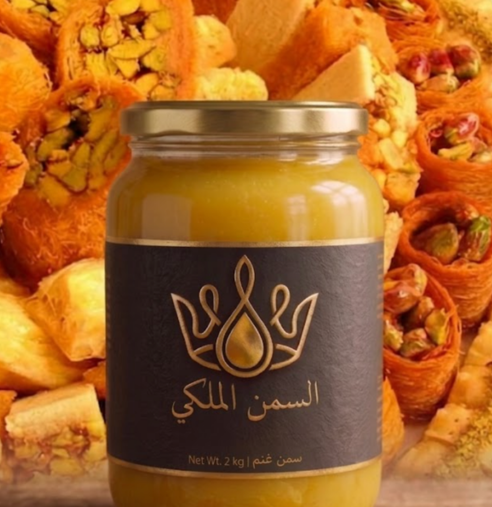
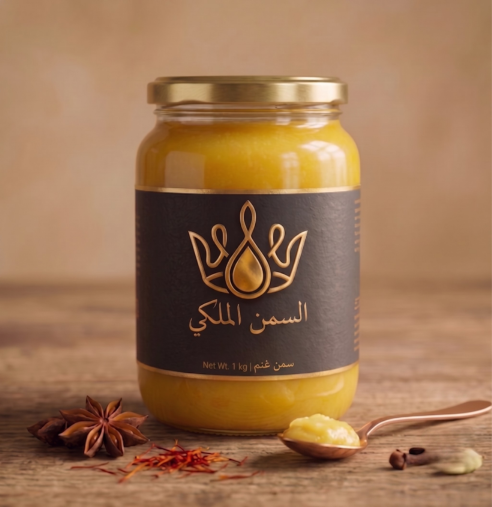
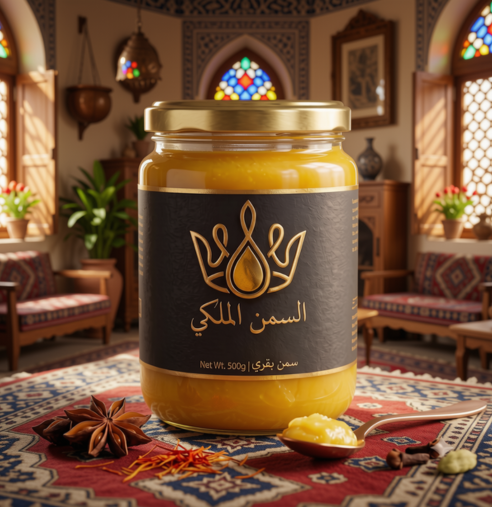
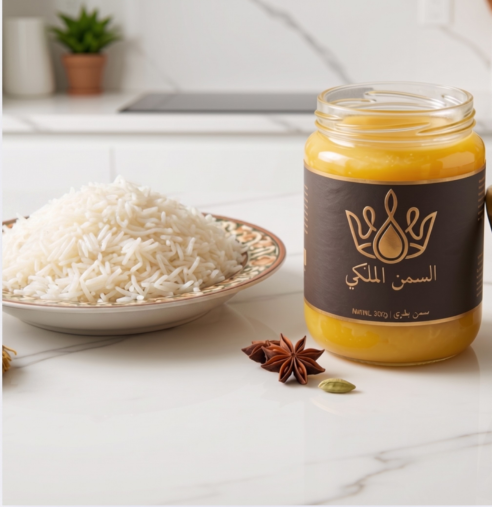
Certified Artisan Heritage Ghee Selection
100% pure Syrian clarified butterfat rendered specifically for master pastry chefs and authentic holiday baking
9. Frequently Asked Maamoul & Pastry Ghee Questions
Why does baked Maamoul sometimes turn hard and tough?
Toughness is caused by inadequate fat ratios (less than 500g ghee per 1kg semolina) or overworking dough after water hydration, triggering excessive gluten formation.
Can vegetable oil be mixed with ghee in Maamoul dough?
Never. Plant oils alter crystalline fat matrices, causing baked cookies to dry out rapidly while robbing them of authentic velvety melt-in-mouth texture.
What is the ideal baking temperature for pistachio Maamoul?
Bake at high heat (220°C–230°C) for just 7 to 10 minutes. Rapid baking protects interior pistachio moisture while setting sharp mold impressions permanently.